Our journey
Discover the story behind Handbasket Haven, born from personal experience and a profound commitment to rare disease patients and their families. Learn about our mission to provide support where none existed, and how we're building a community of hope.
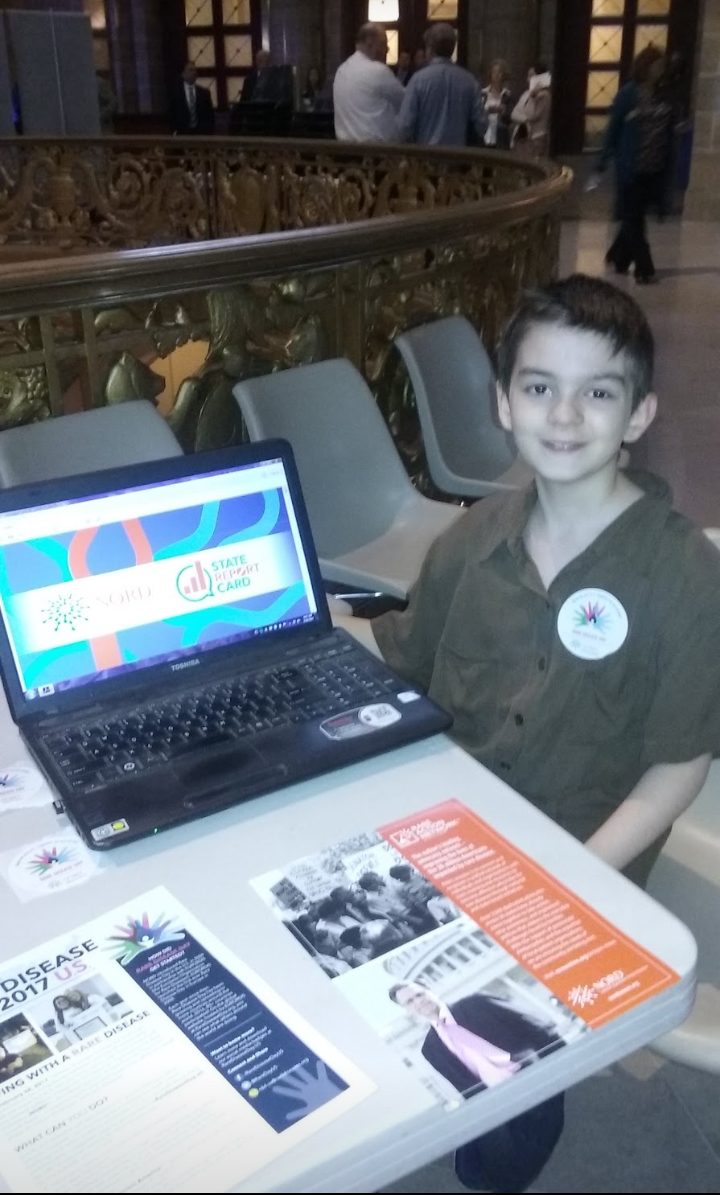
The inspiration behind handbasket haven
My grandson Jaden was born with an ultra-rare unnamed genetic condition, a DNM1 R67C variant and Xp22.31 duplication, documented in only two individuals worldwide. Watching him navigate a system that had no name for his condition, no ICD code, no treatment protocol, and no support infrastructure while Missouri tried to institutionalize him drove me to move to Washington State and build what didn't exist.
Jaden was born with a condition so rare there was no name for it. No diagnosis code. No treatment protocol. No other family who had walked this road before us. From the very beginning we were navigating in the dark — not because the answers did not exist somewhere, but because the system was never built to find them for someone like him.
I watched him work harder than most people will ever understand just to do things the rest of the world takes for granted. Walk across a room. Remember a face. Hold food down. Stay awake. I watched doctors look at one piece of him and miss everything else. I watched a system decide it was easier to institutionalize him than to understand him. And I watched him look at me and trust that I would figure it out.
So I did. For nearly two decades I learned everything I could took courses, read research, sat across from specialists at institutions across the country, built relationships with researchers, fought for every accommodation and every correct diagnosis and every service he was entitled to. Not because I had any of it handed to me. Because there was no other choice.
When Missouri tried to take that choice away, when institutionalization became the offered solution. I packed up and moved to Washington State. Not because Washington had what we needed. Because Washington was where we were going to build it.
That is what Handbasket Haven is. It is everything that did not exist when Jaden needed it. It is the resource hub, the advocacy infrastructure, the community connection, and the fight in the corner that no family in Washington State should have to go without. Because what happened to us — navigating alone, without a name, without a code, without a protocol, without a single person who had been here before — should not happen to anyone else.
Every family deserves a haven. We are building it.

Our mission: for the Undiagnosed and Rare Disease Community
A previous NORD Ambassador, and with nearly 40 years of advocacy experience, across rare diseases, child welfare, disability rights, and federal policy. Handbasket Haven exists because families like ours have nowhere to turn and because Washington State has no rare disease support infrastructure. We are building it from the ground up.

"When you hear hoofbeats, think horses, not zebras." This phrase is told to medical students throughout their training.
In medicine, the term "zebra" is used in reference to a rare disease or condition. Doctors are taught to assume that the simplest explanation is usually the best, so as not to go around diagnosing patients with all sorts of exotic illnesses that are highly unlikely. Common diseases are what doctors should expect to encounter.
But many doctors seem to forget that "zebras" exist, and so getting a diagnosis and getting treatment can be more difficult for sufferers of rare diseases.
The U.S. population is approximately 348.5 million people as of March 2026.
1 in 10 live with a rare disease = 34.8 million people
1 in 13 live with an undiagnosed = 26.8 million people
The United States population is approximately 348 million people. One in ten nearly 35 million Americans — lives with a rare disease. About half are children, and most never live to see their fifth birthday.
The undiagnosed carry an even heavier burden. One in thirteen Americans roughly 27 million people — lives without a diagnosis at all. Again, about half are children, and most never reach their fifth birthday.
These are not small numbers. These are our neighbors, our grandchildren, our families invisible to a system that was never built to see them.
In Washington, between 700,000 and 800,000 people may have a rare disease. Those living with rare diseases often have a long journey to get a diagnosis before they can start managing their condition.
Treatment and Diagnosis Challenges
Of the 7,000 known rare diseases, approximately 95% have no treatment options. It can take years to receive an accurate diagnosis due to little or no research on many rare diseases. Other challenges include:
Difficulty finding physicians or treatment centers experienced in rare diseases.
High treatment costs, often not covered by insurance.
Reimbursement issues related to private insurance, Medicare, and Medicaid.
Isolation experienced by patients and caregivers due to fewer support networks.
Challenges getting medical, social, or financial services or assistance because decision-makers may not be familiar with a disease.

Who we support, why it matters
Handbasket Haven exists to be the haven Washington State doesn't have — a grassroots resource and advocacy hub ensuring that families navigating rare and unnamed genetic conditions are never left without a name, a community, or a fight in their corner.
"Handbasket haven is a lifeline for families like ours, providing hope and support when we felt completely lost."
A handbasket haven family member